Project Overview
The Bengaluru Climate Action and Resilience Plan (BCAP), launched in 2023, outlines a roadmap for a net-zero, climate-resilient city. It addresses key sectors—energy, transport, waste, air quality, water, biodiversity, and disaster management—through inclusive, data-driven strategies. The plan emphasizes equity, public health, and green job creation. While future climate projections indicate rising temperatures and extreme rainfall, BCAP focuses more on actionable adaptation—like urban greening, improved drainage, and sustainable mobility—than on distant forecasts. Vulnerability assessments guide localized interventions, especially for heat-prone and low-income areas. BCAP aims to align with global climate goals while enhancing Bengaluru’s livability and resilience.
Project Details
Organization:
World Resources Institute
Role:
Program Associate
Duration:
May 2022 - Mar 2023
Tools Used:
- QGIS
- Google Earth Engine
- Python
My Contributions:
- Analyzed climate projections from CMIP5 datasets to assess future temperature and precipitation trends across Bengaluru.
- Integrated demographic and infrastructure data to assess the exposure and vulnerability of populations and critical services.
- Contributed to the creation of data-driven maps and graphics used in stakeholder consultations and public outreach.
Impact Summary:
This work provided the scientific foundation for Bengaluru’s Climate Action Plan, enabling the city to prioritize climate adaptation strategies and resilience-building efforts. The spatial insights supported evidence-based policy making, informed infrastructure planning, and enhanced community awareness of climate risks.
Selected Visuals
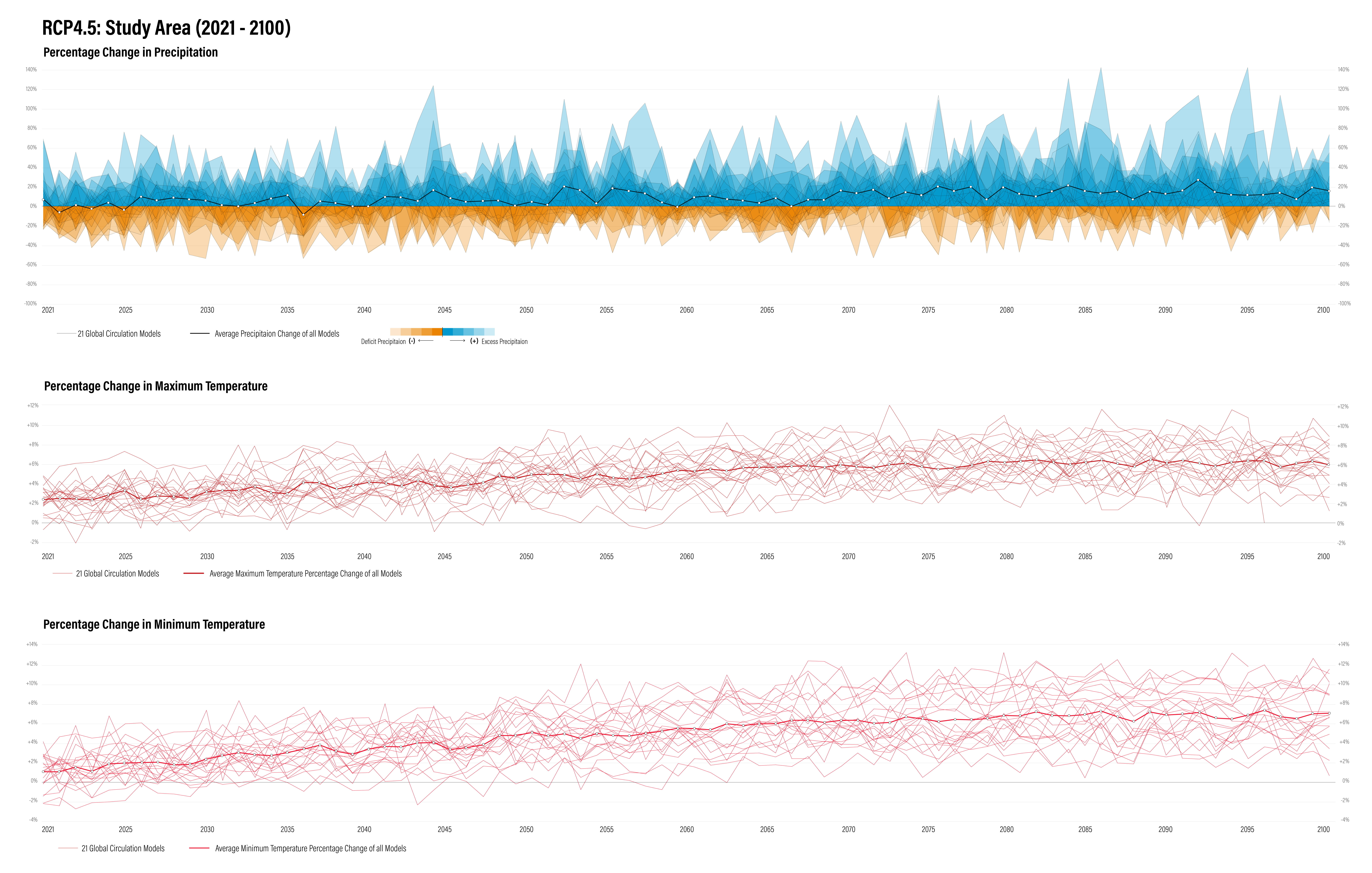
Time-series of changes in projected precipitation and temperature in Bengaluru, India; CMIP5 data processed using Google Earth Engine
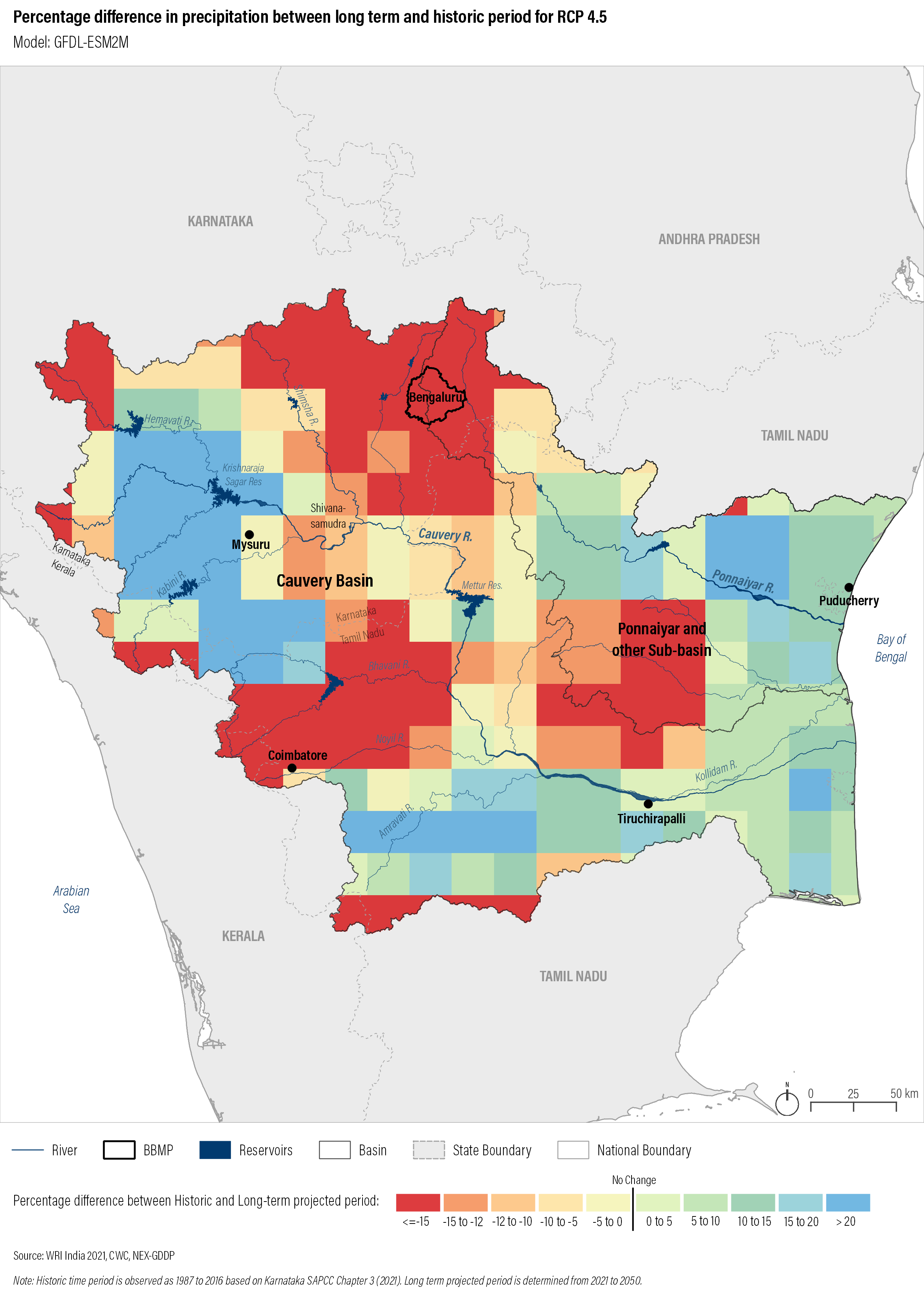
Percentage difference in precipitation between long term and historic period for RCP 4.5 processed using Google Earth Engine and visualization using QGIS